All White Bouquets & How They Age
THE CLASSY CHOICE
When considering what you want your Bridal Bouquet to look like, all white flowers are a lovely and classy choice. In a world where fashion trends and popular color schemes for weddings shift so quickly, an all white bouquet is a constant that will never be outdated. And if you are planning to preserve your all-white bouquet, you’ll want to know how it will fair over time.
SHIFTING COLORS
“White flowers in particular trend toward browns and yellows as they age, but some retain their white coloring quite well!”
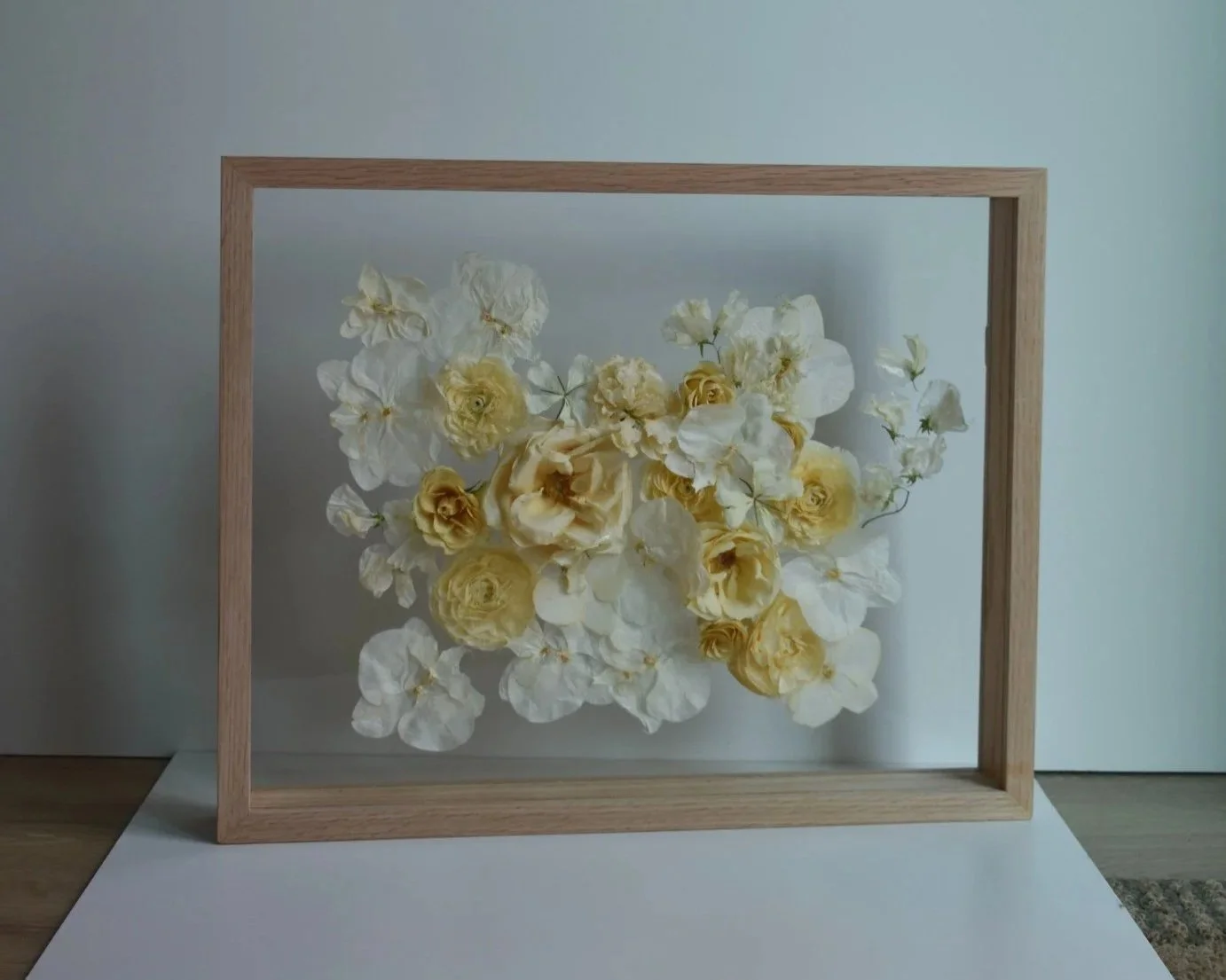
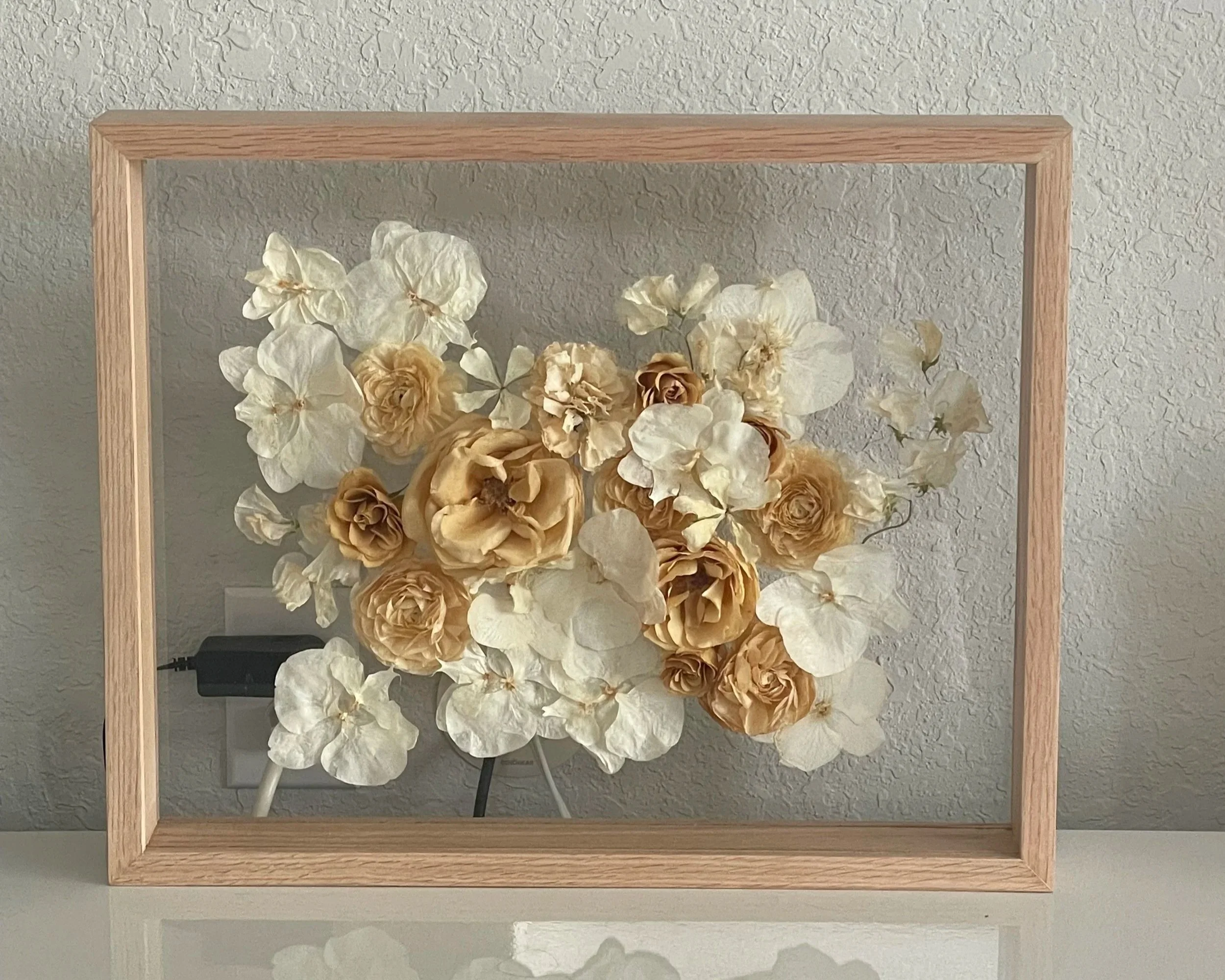
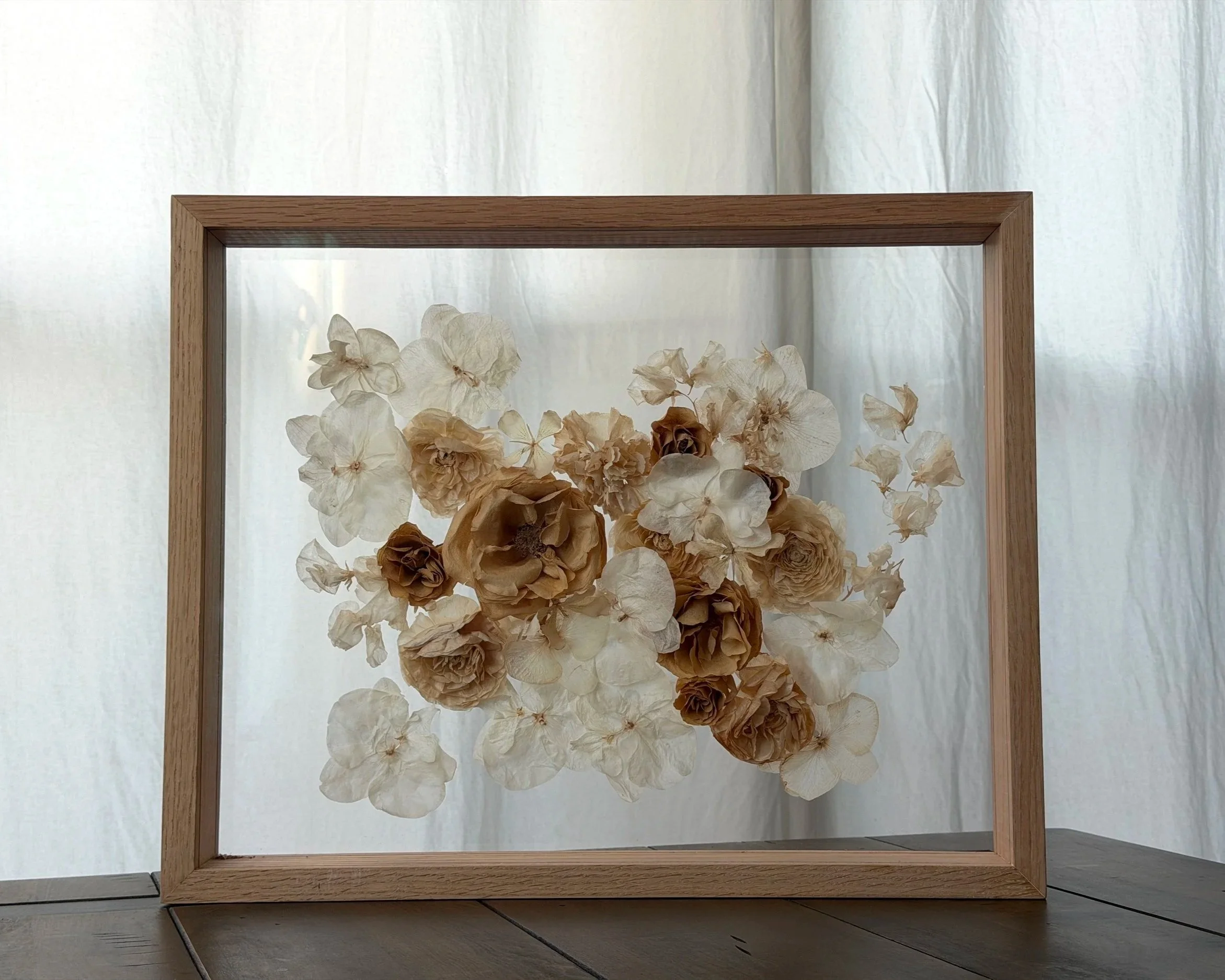
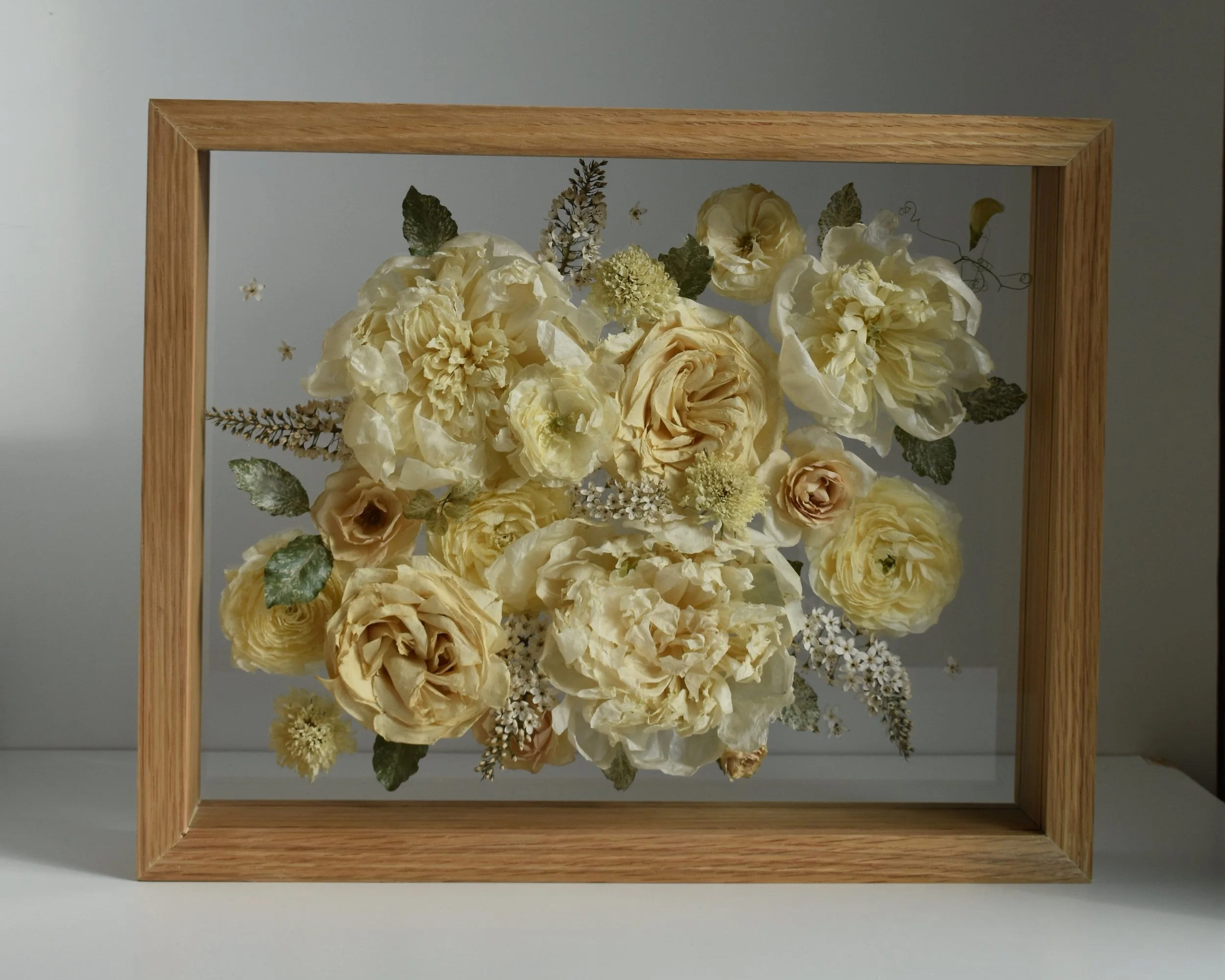
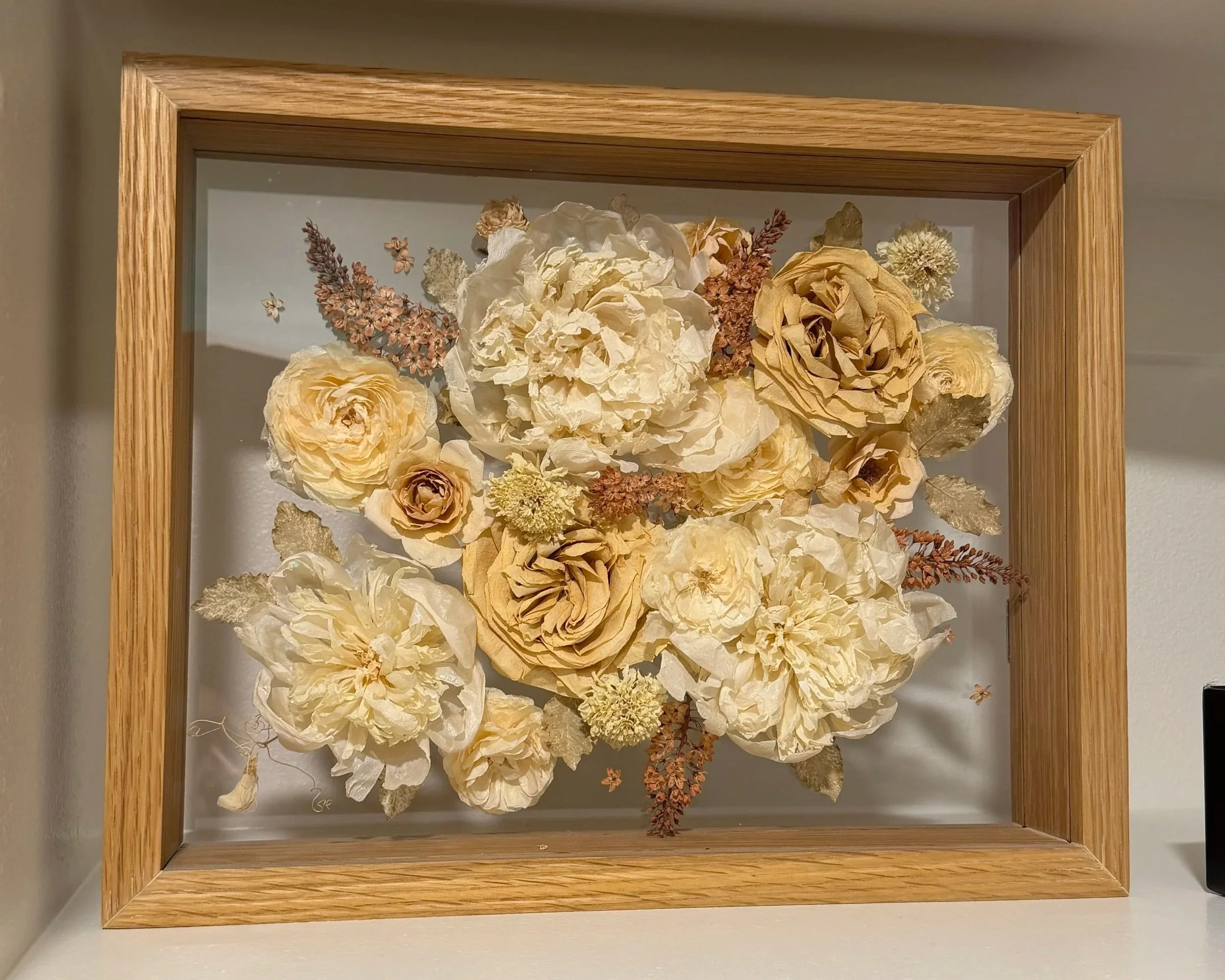
Each flower variety preserves and ages uniquely. There is no way to accurately predict how the colors of a flower will preserve and age over time — we simply have to let time run its course and observe how the flowers behave. As I see more and more flowers age, I develop a wider understanding of how different varieties’ colors shift. White flowers in particular trend toward browns and yellows as they age, but some retain their white coloring quite well!
COLOR CORRECTION
Color correction is a bit of a buzz word in the floral preservation world, and it simply means painting the flowers so that they appear to retain their original colors over time. Many floral preservationists color correct and do a wonderful job, but there are a few reasons why I decided color correction is not for me.
Construction paper look — Color correction can tend to make the flowers look like they are built out of construction paper. Despite our best efforts, I don’t believe anyone is capable of painting a flower so well that it looks like its original self; not to mention that paint pigment cannot always replicate a flower’s natural coloring. I prefer the shifting natural colors to the artificial appearance that often comes with painting the flowers.
All-or-nothing principle — When a preserved bouquet has some flowers that are color corrected and others that are not, it is quite apparent and the two do not often blend well. It becomes even more obvious when the colors of the natural flowers begin to shift but the painted flowers do not — the preserved bouquet turns into a very awkward looking artwork. There are many varieties of flowers that retain their natural coloring incredibly well over time (hydrangea, echinacea, delphinium, hellebore, orchids, and so many more), and it would be a shame to paint all of these simply because a few white roses in the piece were bound to brown.
Art medium integrity — I have nothing wrong with mixed media artworks, but I do have a problem when one is trying to be the other. Bridal bouquets can be memorialized in so many ways — photographs, paintings, resin art, pressed art, shadowbox frames, and even clay replicas — and each is beautiful in its own unique way. If a painting is how you want to memorialize your bridal bouquet, I think that’s a wonderful choice, but I’m going to stick with preserved flowers as they are, fading colors and all.
CONCLUDING THOUGHTS
“One of the many joys of flowers comes from seeing their evolution over time, not excepting the way their colors shift after they are preserved”
We cannot expect that your preserved flowers will look just like they did on your wedding day. Flowers are a live product, and their appearance shifts their entire lifespan — from seed, to sprout, to bud, to full bloom, to cut flower on day 3, to wilted at the end of the event, to newly preserved, to preserved on day 26,583. One of the many joys of flowers comes from seeing their evolution over time, not excepting the way their colors shift after they are preserved.
*Frames in photographs were designed by Florals Preserved